Tag Archives: publish

Interview with Published Author Fran Metzman “The Hungry Heart Stories”

No, it is not a little blue woman from Mars (although that would be totally cool, too.)

Today my humble little site is part of Fran Metzman’s promotional blog tour for the release of her short story collection:  THE HUNGRY HEART STORIES.

Each of the twelve stories in Fran’s collection involves food as a means to fulfillment (If it were me, it would be a book all about chocolate)  🙂

Without further ado, let’s welcome the lovely and talented Fran Metzman!

Hello Fran, and welcome to “Learn from my Mistakes”

Fran:  Hello everyone!

***Imagine Fran smiling and waving madly***

This site is dedicated to new and soon to be published authors. At the end of this interview, would you be willing to answer questions from inquiring minds?

Fran:  Yes.  I would be delighted.

Great!  Keep that in mind, guys.  Okay, let’s get started.

Fran, would you tell us about the first time you were published.

Fran: I consider this publication of THE HUNGRY HEART STORIES, as my first, as it is actually the first one published with only my own name. The other was co-written. In UGLY COOKIES and THE HUNGRY HEART STORIES, each story deals with relationship issues – a theme that has always intrigued me.

What part of relationships intrigues you so much?

Fran: We are all trying to find a level of satisfaction in relationships and it is common to feel cheated at some point in our lives. We yearn to fill emotional voids. I want to answer the question – how far will we go to find a relationship that answers deep-rooted needs?

As a writing teacher, what do you see as a re-occurring problem you need to “teach out” of new writers. What are the common mistakes they make?

Fran: I do encourage people to write from the heart, but all too often that is where they want to stop. In my opinion, it is vital to understand the structure of fiction writing because in today’s world of publishing whether it is non-fiction, memoir and even journalism, they are expecting the works to follow the form of fiction. Once a writer has that under his/her belt they have the option of experimenting. It’s like art – you must understand the structure of the body in order to sculpt or paint a figure before going on to other genres.

Can you explain that a little more? Do you mean “fitting into a set mold” or is there a certain structure that is undeniably necessary?

Fran: I don’t mean for anyone to be locked into a particular writing style. My undergraduate degree was from Moore College of Art in Philadelphia and I was a sculpture major. When we learned how to draw a person we did it step-by-step. First we did a skeleton then laid a clear sheet on top and did the muscles and sinews next. The final plastic sheet presented with skin, face, hands and toes. It was a process that enabled us to understand the structure of the body so that all parts were anatomically correct. Once we understood that, we could use that information to evolve into our own thing.

Interesting.  How did this help to make you a better writer?

Fran:  Figures differ but when the different body parts are out of scale it disturbs the visual rhythm the same way the written format may become unbalanced. For instance, if there is too much description that goes on for pages you will, in all probability, lose your reader unless you have presented such a strong, unique voice that we get lost in the work. That doesn’t happen often. Once you have an understanding of the structure, you can experiment.

Wow.  Not too many of us have the experience of learning art in that way, and can relate that to our writing.  Interesting insight.  How do you think a new writer can get there, without sculpting in clay?

Fran: Write regularly on a set schedule even if it is only once a week. WRITE!

Tell us about your first novel “Ugly Cookies”.
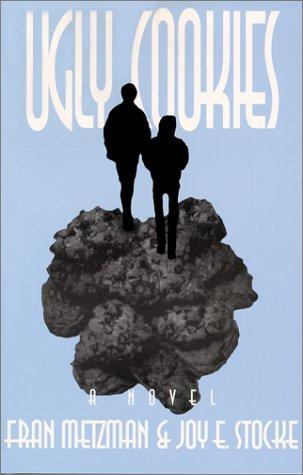
Fran: I co-wrote UGLY COOKIES with Joy Stocke based loosely on several short stories that seriously involve parental/child relationships, romance and feminist ideals. It also has a sub-plot of prejudices toward the elderly, something that has become a hot topic nationally today.

What was your reaction when you first saw a “real” printed copy? What did you do?

Fran: Seeing that book in print thrilled me and made me incredulous at the same time. Was that my name on the cover? How could that have happened? It had a dream like quality to it. But that didn’t last long as we had to immediately get into the huge amount of work involved in publicity.

I’ve had a lot of discussions with people, and this is what they are most worried about… Promoting.  What did you do to publicize?

Fran: It has changed so dramatically from the time my first novel was published about 10 years ago. Now it is VIRTUAL TOURS. Book chains and many independents have folded in the interim and fewer people attend live readings. We have generations who are constantly on computers, texting, googling, IPhoning, game playing, and connected tightly to screens for a myriad of reasons. The new way of publicizing is not easy for someone like myself who still prefers hard copies of books.

It’s okay, you’re doing fine.  We bloggers are a friendly group.  What’s been the hardest part about cyber-publicizing?

Fran: Today it’s all about being online for links, connections, websites, tags, Facebook, Twitter and the plethora of connections online. This consumes mammoth amounts of time as I worry when will I get back to writing.

Piff!  Speaking to the choir, my friend!  Let’s talk about some awards.  “My Inheritance” was nominated for a Dzanc Books Award for Best of the Web. Was that a surprise? What do you think made it stand out from the others?

Fran: That story has always impacted me emotionally, but I was a bit surprised as there are so many mother/daughter stories out there. It is a sensitive subject and many women choose it as a topic. I hoped I had a somewhat different spin on it. I did know someone who went into therapy when her mother was diagnosed with a terminal illness. I didn’t know any details, just had this nugget. So the story is a total fiction. But as in all my stories, there is a seeking for redemption.

You just released “The Hungry Heart Stories”. Each short story in the collection relates to food in some way. Why did you choose food as a theme?

Fran: My own mother was a sensational cook and baker. It was a major way for her to express her love. When I came home from school the house was filled with the most delectable scents, oh those wonderful peach pies. There are a couple of downsides and one is that I was a chubby kid. The other was refusing food could be a serious problem in my house. I believe, my mother interpreted it as a rejection. So, I learned to eat every morsel put on my plate.

Tee Hee. It was the same way in my house, but since my Mom was raised during the Great Depression, it was more “There are children starving somewhere” rather than a rejection thing. Did this affect your eating habits as a grown-up? Personally, I cannot TOUCH beef stew, asparagus, or boiled spinach.

Fran: Indeed, I developed bad eating habits. If you eat every bit on your plate beyond the point where you are full, it is just unhealthy excess. For years I have had to be very careful to get that under control. It is a fight every day not to overeat or eat the wrong foods. For years I didn’t eat strawberries (I do now) because my mother insisted I eat her cake that had strawberries in it. I wasn’t hungry and I sat for two hours staring at it. Finally, I gobbled it up so I could go out and play.

I’m looking at the cover of THE HUNGRY HEART STORIES.  There is a woman gazing into the distance. It feels like she is old to me, or maybe taking a step out of time.  Also, there is no food to be seen. Is there some underlying symbolism there?
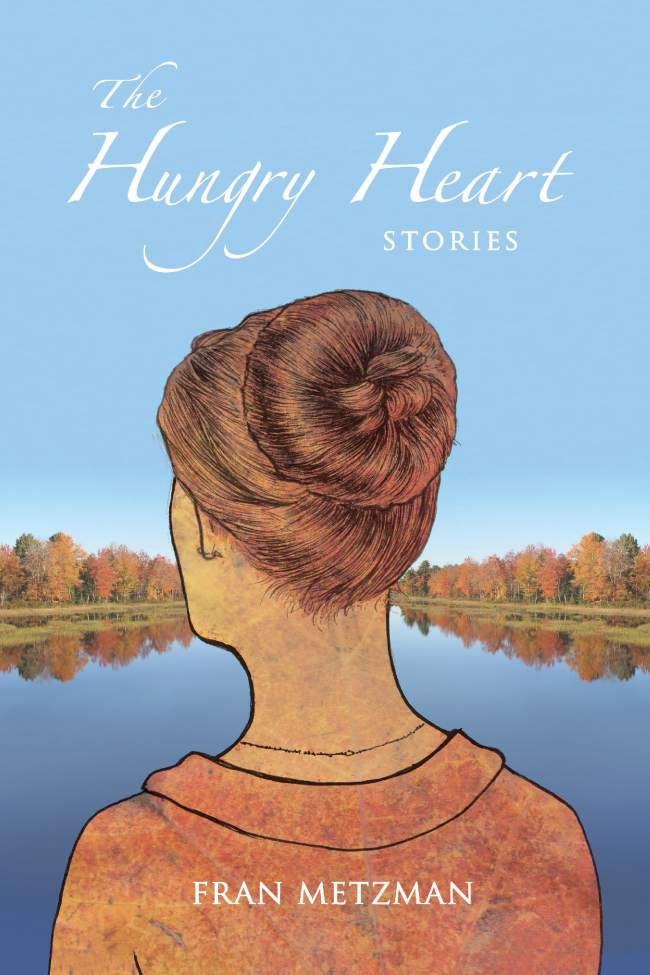
Fran: The woman on the cover was to represent women of all ages who are yearning to fill an emotional void in their lives. She looks into the distance, hoping to find some answers. That kind of void is threaded throughout the stories, but the protagonists are all pro-active in trying to backfill a hunger yet to be satisfied. Some go to the edge to fulfill what they perceive as the missing piece that once found will make their lives whole. But in seeking to resolve this lack of fulfillment – they might go to the edge.

After having been through the publishing process twice, what little snippet of advice would you give to soon to be published authors?

Fran: The publishing industry is, as everyone knows, very, very tough. This is where knowledge of fictional structure pays off. You have to submit a near perfect piece in order to get it published. The time is long gone when an author could say that something they wrote needs some work but publishers have editors for that. The industry has leaned down so that there are fewer editors and little time to do overhauls.

So, do you think everyone should look into a professional editor before they even submit a manuscript? Does that go for submitting to agents, too, or just publisher direct?

Fran: Yes, a near perfect manuscript is expected from agents and editors. Since an agent doesn’t make money until they sell the book, they are especially reluctant to spend time trying to make it pitch perfect for publishers. As for professional editors, that could be expensive. If you can afford it, I say go for it. Check the editor out as well to make sure they are good. If money is an issue, find a friend who is an educated reader for content and clarity. If they are grammarians or can edit well — even better. Workshopping with a group of writers is also very helpful.

Other than editing, do you have any other advice?

Fran:  Not only does it have to be in excellent shape, the beginning has to be a grabber.

There you have it… words of wisdom from author Fran Metzman.  Thanks for stopping by Fran!

I am now opening it up for questions.  If you have a question for Fran, just post it in comments below.

Fran Metzman Author Bio

Award-winning author Fran Metzman is a graduate of the Moore College of Art and the University of Pennsylvania.  In addition to publishing numerous short stories and two novels, she also teaches writing at various local colleges and universities.  Her blog “The Age of Reasonable Doubt” can be found at Wild River Review.

THE HUNGRY HEART STORIES
Wilderness House Press
ISBN 978 0 9827115  5 2

On Amazon: http://tinyurl.com/7xgqgsn

On Barnes & Noble: http://tinyurl.com/6pubq6c

Ugly Cookies: http://tinyurl.com/7tod2er

The Age of Reasonable Doubt: http://www.wildriverreview.com/metzman/

Wild River Review: http://www.wildriverreview.com/

“My Inheritance”: http://www.wildriverreview.com/FICTION/My-Inheritance/Fran-Metzman

Want more Fran?  Visit these great sites, also hosting this tour with reviews and more interviews.

Monday, February 13th
“Welcome to Hell” by Glenn Walker
http://www.monsura.blogspot.com

Tuesday, February 14th
“Writing – Art – Metaphysics” by Shelley Szajner
http://shelleyszajner.wordpress.com/

Wednesday, February 15th
“BeccaButcher’s Blog” by Becca Butcherhttp://beccabutcher.wordpress.com/

Thursday, February 16th
“GilbertCuriosities” by Marie Gilbert
http://gilbertcuriosities.blogspot.com/

Friday, February 17th
“The Author-in-Training” by Mieke Zamora-Mackay
http://www.miekezmackay.com/

Saturday, February 18th
“A Reference of Writing Rants for Writers or “Learn from My Mistakes” by Jennifer M. Eaton
https://jennifermeaton.com/

Sunday, February 19th
“GilbertCuriosities” by Marie Gilberthttp://gilbertcuriosities.blogspot.com/

Monday, February 20th
“BeccaButcher’s Blog” by Becca Butcherhttp://beccabutcher.wordpress.com/

Tuesday, February 21st
“The Dream Between” by Robin Renee
http://dreambetween.wordpress.com/

Wednesday, February 22nd
“Literary Debauchery” by Krista Magrowski
https://kamagrowski.wordpress.com/

Thursday, February 23rd
Wrap up with Glenn Walker
http://www.monsura.blogspot.com
Lesson Twenty Seven from a Manuscrupt Red-Line: Fluidity in Action-The Art of a Good Fight Scene

An example of a poorly written action scene:

Jason punched Eric in the face.  Eric fell to the floor.  Eric groaned and rolled over.  Jason wiped his chin and laughed.  Eric popped up, and Eric swung at Jason, but missed.  Jason ducked and swung at the same time.  Eric crumpled to the floor.

(Yes, I totally made this paragraph up.)

The publisher’s comment on a similar (but not as poorly written) sceneThis is a very stilted fight scene. It reads action, next action, next action, next action without the fluidity that’s needed for a fight scene.

For an intro into where these tips are coming from, please see my post: A Full Manuscript Rejection, or a Gold Mine?

You can also click “Rant Worthy Topics” in my right navigation bar.  Choose “Gold Mine Manuscript” to see all the lessons to date.

I have to admit, when I read the action passages in the Gold Mine Manuscript, I had the same comment.  The author was satisfied with the speed of the scenes though, and only made moderate changes.  Not being an expert, I backed off and figured it was just a “style choice”.  Guess not.

This fits in very well with my recent post on “Art of the Conflict”.  This scene is not about dialog, but this is definitely a conflict.  This one needs something inserted to break up the action, rather than action inserted to break up the dialog.

Now, I am not going to put a lot of time into this, since the scene is totally fake.  But let me add a little “art” to make it “flow”.  Fluidity is what they asked for.  Okay, here it goes…

Jason grunted as his fist swung toward Eric’s face.  Eric tried to dodge, but instead felt the sting of the older boy’s ring cutting into his jaw.  He fell to the floor with a muffled thump, and groaned as he rolled over.

Jason wiped his chin and laughed.  “I told you to stay down.”

Eric pushed up onto his knees.  “Why, so you can just pummel me?”  He popped up and swung at Jason, but missed.

Jason ducked and swung at the same time.  There was no time for Eric to react.  His head creaked back, and his jaw rattled as he crumpled to the floor.

Better, huh?  Not perfect by a long shot, but not bad for three minute flash fiction.  Can you feel the difference?  The staccato choppy “This happened-That happened” feel is gone, and the scene “flows”.

Of course, this is a first draft.  In editing, I would have to remove the “ing” word and the telly “felt”.  I would also insert a little emotion when Eric realized he missed, but this is definitely better by far than the first.  The art draws you into the scene.  You experience it, rather than just watching it.

The art of the conflict… If you don’t have it, go get it.

If you want to see a great published example, pick up a copy of  THRONE by Phillip Tucker and open up anywhere in the last hundred pages or so.

I hope this helps to make it more clear!

Lesson Twenty-Six from a Manuscript Red Line: CAPITAL LETTERS

Do you use Capital letters when your character yells?  Do you use them for casting spells?  Do you use them for inner thoughts?


Me?   No, Jennifer. 

I would never do such a thing! 

Well, I might… and I have.

For an intro into where these tips are coming from, please see my post: A Full Manuscript Rejection, or a Gold Mine?  You can also click “Rant Worthy Topics” in my right navigation bar.  Choose “Gold Mine Manuscript” to see all the lessons to date.

Amendment:  Hey!  This is my 100th post!  COOL!

I briefly mentioned CAPS in my first post on the Manuscript Red Line. (That was over Five months ago… Wow)  Anyway… here is the explanation.  The publisher said:

“The use of capital letters to show emphasis in a scene is not acceptable.  Especially don’t use it with magic, since JK Rowling did it that way.” (The Gold Mine author used caps as the character cast his spells)  “Come up with something new.  This is the key to fantasy – be unique – try not to do what was already done.”

Don’t shoot the messenger… this is their red-line, not mine.

In my novel, the characters don’t cast spells, but I did catch a few YELLING once in a while in CAPITAL LETTERS.  I got so used to looking at it that I liked it, but I have to admit, it works much better as “Get out!” rather than “GET OUT!”.  I use caps a lot for emphasis in my blog, so they may have wiggled their way into my novel.

For all you spell casters out there:  You can do better than JK Rowling.  She had her idea.  Now you need to come up with yours.  What are you going to come up with that everyone else wants to copy?

Lesson Twenty-Four from a Manuscript Red Line: Remembering where your characters are

Do you pay attention to where your characters are in a scene?  Are you sure?  I thought I was sure too.  Guess what?

For an intro into where these tips are coming from, please see my post: A Full Manuscript Rejection, or a Gold Mine?  You can also click “Rant Worthy Topics” in my right navigation bar.  Choose “Gold Mine Manuscript” to see all the lessons to date.

The publisher who red-lined the Gold Mine Manuscript pointed out a scene where the two main characters were running side by side away from some danger.  All of the sudden, one of them shouted from behind the other one.  The comment from the publisher was:  “They were together, but you didn’t say he jumped ahead. How then did she get behind?”

I read over this the first time I looked at the red-line, because it seemed like another “duh” comment.  However,  just a few weeks ago one of my betas pointed out that both my characters were standing right next to each other, and then all of the sudden Jerric walked up to Magellan from the other side of the room.  Why would he walk up if he was already at his side?

Similarly, I recently re-wrote a scene where someone was seated the entire time.  In the end, he falls off the chair.  I changed it so he stands up early in the scene, but after leaving it for a month, and then looking at the scene again, I noticed that my “standing” character still fell off the chair.  Was he standing on the chair?  Of course not!

The point of all this is to pay attention to where your character is, and make sure it is consistent throughout the scene.  If not, show us the movement.  If you don’t, you can unintentionally make your scene comical.

Lesson Twenty-Three from a Manuscript Red Line: Kindle Syndrome

Does your novel have Kindle Syndrome?

Would you be able to recognize it if it did?

For an intro into where these tips are coming from, please see my post: A Full Manuscript Rejection, or a Gold Mine?  You can also click “Rant Worthy Topics” in my right navigation bar.  Choose “Gold Mine Manuscript” to see all the lessons to date.

I read right over this comment at least five times.  I do not own a kindle, so I didn’t understand what the publisher was saying.  This past weekend, I messed around with my sister’s Kindle.  Now this makes sense.  Let me explain…

The publisher said:  “This is a very long section that takes up two kindle pages of material.  Break it up with action and reaction.”

I believe I’ve already blogged about the overall problem of info dumps that go on too long, but this time when I read this comment, the “Kindle” word jumped out at me.

It would be foolhardy for anyone to think that their novels are going to be read 100 % in printed form.  In this new era, it’s just not feasible.  As we all know, technology has finally taken over the publishing world.

When I beta-read novels, I sometimes blow up the pages and just look at them.  If it looks like a text-book, I know there is a problem.  People want white-space when they read recreationally.  A dense page seems like too much work, right?

Now think about the Kindle (or choose your e-reader)…  What does it look like?  Do you see a full page like in a book?  Unless you are reading on something large, the screen is much smaller than an actual page.  A Kindle reader may press the forward button 2-3 times to get through a printed page of material.  I checked the word count on the section that they were talking about, and it was 230 words.  That’s about one page in a standard book.  If you change the type font and make it larger, there would be even more clicks to your page.

Do you really want your reader to click forward 3-4 times and have them still skimming reading the same description?

This is what I am getting at… The importance of White Space

White space is when you can “see the paper” behind your words.  White space can be achieved by new paragraphs, but it is done most effectively with dialog sequences.  Open up a few novels.  You should be able to see what I mean.  Your novel should not look like a text-book.  If there is dialog, it will look more “interactive”

I know as a reader I like white space.  It makes me feel accomplished.  True, on a kindle you cannot feel yourself getting to the end of a novel.  You might not even know you are at the end until you are there, since there are no page numbers (at least on the one my sister showed me)—so feeling accomplished while reading one must be hard…  But because of this, your reader will be effected EVEN MORE by lack of white space, because it will be so much more dramatic on a kindle screen rather than on paper.

I know a lot of you might not care… but I thought this would be worth mentioning.  We are living in a new world.  We have to consider what your novel will look like on the new media.   One or two long dense paragraphs might be fine once in a while, but make sure your scenes are broken up not only for pacing, but to get some of that “all so important” white space.

Amendment:  Since writing this post, I was given a Kindle Fire by my wonderful husband, and I am now 75% through my first novel.  Now that I am in this “electronic world,” I have to admit that everything I said up above really does apply.  Some of the description in the novel I am reading go on for 5 or more kindle pages of dense text.  The prose is beautiful, and well written, but to be honest I always start skimming somewhere in the middle of the second kindle page, which is far sooner than I would have on paper.

Also, on the Kindle Fire there are no page numbers, but it does tell you “percentage read” so you do see yourself getting to the end.

For me though, it makes the long descriptions even more monotonous because I like to feel accomplished.  I try to read a certain percentage each night, and I don’t know how many pages I have to read to achieve another “percent” read.

Yeah, I’m a nut.  But I am sure I am not alone!  Have mercy on a nutty reader.  Avoid Kindle Syndrome.

Jennifer Eaton

Lesson Twenty-Two from a Manuscript Red Line: Does your Protagonist “Grow Enough?”


In the closing comments of the Gold Mine Manuscript, the Publisher who red-lined it noted that the MC didn’t “Grow enough”.

For an intro into where these tips are coming from, please see my post: A Full Manuscript Rejection, or a Gold Mine?  You can also click “Rant Worthy Topics” in my right navigation bar.  Choose “Gold Mine Manuscript” to see all the lessons to date.

They said the main character does not have a struggle in the story that pulls him from one state of being to another.  They thought he was pretty much the same at the end of the novel as he was in the beginning.

I’m not really sure I completely agree about this comment.  I saw little changes in the character throughout the novel.  I suppose the problem was the presentation of the final scene.  The author wound down from a big action scene very well, and in the end, the MC is relaxing and thinking.

I am just guessing here, but maybe the Main Character’s thoughts should have reflected HOW he is changed.  Maybe he should be thinking:  “Wow, I was such a stuck up prude, and the world used to revolve around me, and now I just put my life on the line and fought an army and stood up for myself to protect a whole kingdom!”

Okay, that was really bad, but do you get my meaning?  Again, this is totally a guess, but this publisher is looking for “the change”… What happens to the MC along the journey that makes him or her a better person?  This, again, brings me back to my own novel (and you should be thinking about yours)

Does Magellan change?  Well, yes.

  • He starts out confident,
  • Gets ripped away from his family, get unconfident.
  • He gets the approval of the King, gets confident,
  • He leaves the King’s house, gets picked on all the time, and gets unconfident again
  • Finally, in the end, he steps up to the plate, and proves his worth in the climax.

However—does he think about this in the closing scene?  Well, no, he doesn’t.  But… in the last few lines there is another change that slaps the reader in the face with an “Oh my Gosh!”

My overall change, like in the Gold Mine Manuscript, happens during the climax.  Then there is this little hook after the wind-down in the last paragraph, which could be considered an epiphany.  It includes another change, and then a “no way!”  Is this going to fly in the publisher’s opinion?  Dunno.

I changed my ending a lot in the last year to make sure Magellan changes.  I had him fall in love, I had him not be in love, I had him flat, I dealt with amnesia, I had him accept who he was, I had him outright refuse to be the factotum… yikes what I put this kid though!

Admittedly in the first draft, he really didn’t change at all… at least on the inside.  I didn’t know this was a pre-requisite for story-writing.  Now, I think the change is there.  At least, I THINK THAT’S WHAT I WROTE (Go back and read that post if you don’t remember it)

I hope my stab at an exciting last page didn’t “blow it” but I guess that’s for the publishers to decide.

What about yours?

Jennifer Eaton

Lesson Twenty from a Manuscript Red Line: Don’t make things so easy

For an intro into where these tips are coming from, please see my post: A Full Manuscript Rejection, or a Gold Mine?  You can also click “Rant Worthy Topics” in my right navigation bar.  Choose “Gold Mine Manuscript” to see all the lessons to date.

In the Gold Mine Manuscript, there is a point where the MC is thrust into the magical world.  He has been there for a few days, and suddenly he is faced with an animal that can speak to him through their minds.

In concept, this is fine.  However, the publisher red-lined that the MC was “too accepting” of this.  The MC just jumped in and said “okay, no problem” – well, he didn’t say it that way, but he jumped right on board.

The publisher said that it would be okay for the characters who were born into this world to be fine with this, but the MC should not accept so easily.  A few paragraphs later, the MC also tells his friend  that there’s nothing to be afraid of, and that he’s harmless… they red-lined that too.

Think of it this way… if you ran into a guy in the street, and just started talking to him for a few minutes, would you be willing to risk your life, and your best friend’s life in trusting this person, or would you be a little wary?  Now make this person a really large mythical animal.  Getting nervous yet?

Be careful that you don’t put your own knowledge into your character’s heads before that knowledge is learned.  You as the author know there is nothing to fear, but to make it realistic, your character’s “trust” needs to be earned to a degree.  Let relationships develop so they seem more natural and believable.  Don’t take the easy way out to move your story ahead more quickly.

Think over your novel.  Have you done anything like this?

Jennifer Eaton

Lesson Seventeen from a Manuscript Red Line: Who are we talking to?

For an intro into where these tips are coming from, please see my post: A Full Manuscript Rejection, or a Gold Mine?  You can also click “Rant Worthy Topics” in my right navigation bar.  Choose “Gold Mine Manuscript” to see all the lessons to date.

We’ve been on Point of View for a little while now.  No need to break a trend.  This particular publisher harped on it a lot, so here I am passing their wisdom on to you.  The next POV comment they made was to make sure it is immediately obvious when you start a chapter whose POV you are in.

I was a little surprised by this.  One of the things that I admired in the Gold Mine Manuscript, was the beautiful imagery.  The author is so much better at building the “view” of the scene for a reader than I am.  The problem is, that she did it in the beginning of the chapter.  As a reader, you would have to get through the entire description of the room before you found out who was in it.

Honestly, I never even considered this a problem.  I liked it so much, that I even tried a few on my own.  It sounded weird in my novel, though.  My natural instinct was to write “Harris stepped into the room.  Pink cascades of fabric surrounded him.”  Rather than:  “Pink cascades of fabric swirled along the walls, dipping and spinning before the etched windows…etc , etc.

Both of these two examples tell you there was pink fabric hanging from the walls.  One just tells you that Harris was in the room.  This publisher prefers the first example.

This is really not a tough fix.  If you have a flowery, beautiful beginning (Good for you, I stink at this)  Anyway… keep your imagery, but introduce the POV character who is seeing the scene, so we know whose “head” we are in.

Happy editing!

Jennifer Eaton

Lesson Sixteen from a Manuscript Red Line: Cutting down your Point of View Characters

For an intro into where these tips are coming from, please see my post: A Full Manuscript Rejection, or a Gold Mine?  You can also look at “Rant Worthy Topics” in my right navigation bar.  Choose “Gold Mine Manuscript” to see all the lessons to date.

Lesson Fifteen discussed the necessity of cutting POV switching to a bare minimum… but how do you do this?

My suggestion?  Make a list of all your POV characters.  I’ve been doing this as I’ve been editing.  Once you have the list, decide which are really major characters, and which are just there for information.  Here’s my list, and my judgement calls on each character.

1.       Magellan – Main Character – No brainer.  He needs to stay.

2.       The High King  Hmmm.  I think I need him.  Without his POV too much of the explanation of the world is gone.  Only delete if absolutely necessary

3.       Stephen – The villain– Not budging.  I need to get into his twisted homicidal brain.

4.       Castillia – The Goddess – I’ll have to chop some stuff I love, but I think she can go. Magellan is in most scenes, so I can use his POV.

5.       Instructor Candor – The only one who really knows what’s going on in the story– Cut only as a last resort

6.       Prince Harris – Main Plot line character – He has to stay.  No budging

7.       Tome – Minor character – Delete most of his POV.  See if I can get away with the one small section that contrasts with Prince Harris at the end of the book.  I can delete that if I must, but I like the contrast of rich and famous compared to poor pauper.

8.       Jerric – Delete POV.  Easy to use other characters.

9.       Minthius – Minor character – Delete and rewrite in the King’s POV since they are in the same scenes.

10.    Dacailin’s Son – Ha!  I can’t even remember his name!  He only had a small POV for information only. Delete.

11.    Matt – Could probably remove his POV, but at the end, it has to be there.  Fight for this one.  If I lose his revelation at the end, I think it confuses the novel.

12.    Harris’s Mother  – Informational only – Giving a sentimentally weepy okay to delete.  I can explain the horrors of the Stanton Castle through Steven’s POV (Although with less emotion.  Ugh)

13.    Red – Transition character for Harris – Delete (**sob**) No need to get into her head since we will never see her again in this novel.  Delete the scenes in her POV entirety.  Erghhh!!!!!! (Her first two scenes with Harris will stay-they’re in his POV)

14.    Matt’s parents – Only one scene – Delete and let Matt overhear it

15.    Meagan – Girl Power – She only has a small POV section at the end of the novel as everything gets sewn up.  She’s the girl, though.  I know I might be asked to get into her head more.  Right now I am avoiding it by using Magellan, Stephen and the King in most of the novel.  Might be able to get away with leaving it like it is.  (I can be hopeful, can’t I?)

Wow—That’s 15 points of view!  I didn’t even realize it.  I never even considered that this may be a problem.

So, here are the stats after I broke them down:

Necessary POV:

1.       Magellan (MC)

2.       Stephen (Villain)

3.       Prince Harris (Main Plot Line Catalyst)

4.       Meagan (Girl Power)

POV that I’d like to keep

1.       Instructor Candor

2.       King

3.       Matt

POV that I can remove

1.       Castillia

2.       Tome

3.       Jerric

4.       Minthius

5.       Dacailin’s Son

6.       Harris’s Mother **weep**

7.       Red **painful**

8.       Matt’s parents **possible loss of sentimentality try to keep sentiment in the re-write**

So, I have four POVs that need to be there.

Eight POV’s can easily be eliminated. (Not that it won’t be work) The characters will still be there, but the scenes will be told from someone else’s perspective.

I’m left with three more POV’s that I really want.

The King is intrinsic to the beginning of the story, and the end.  No other POV characters appear in his scenes.

Matt is intrinsic to the end of the novel.  He is “alone” in the Pre-climax scene where a revelation happens for the reader.

Candor moves the story forward in the middle.  He is the only character that does not lose his memory for most of the novel.  I might be able to remove him.  I’d just rather not.

POV characters that will remain:

1.       Magellan (MC/Protag)

2.       Stephen (Villain)

3.       Prince Harris (Main Plot Line Catalyst)

4.       King (Overall Story Driver)

5.       Meagan (Girl Power) **One POV scene at the end only if I can
get away with it**

6.      Matt (The “best friend” – Only in the third act)

So, this is what I’m going to cut it down to.  I am hoping that this will fly, and they do not ask for more cuts once this gets into the hands of a publisher.  Each of these characters have a big enough role that I think a reader can identify with them in their POV.  The main POVs will be Magellan, Stephen, Harris, and the King.  Matt and Meagan’s POV will be near the end.  (Which I know is a “no no”, but I am going to try to bend the rules a bit)

For all intents and purposes there will only be 4 POV’s in the first 350 pages.  Matt pops up around Page 350, and we pop into Meagan’s head in the tie up chapters at the end.

Hopefully, by removing the ones that were obviously there just as info-dumps, I will be able to slip in a few extra without it being noticeable.  (Yeah, I know.  Wishful thinking, but I can try.)

Good Luck!

Jennifer Eaton

Lesson Fifteen from a Manuscript Red Line: How Many POV’s Can You Have?

For an intro into where these tips are coming from, please see my post: A Full Manuscript Rejection, or a Gold Mine?  You can also click “Rant Worthy Topics” in my right navigation bar.  Choose “Gold Mine Manuscript” to see all the lessons to date.

At one point in the red-lining of the manuscript, the publisher stopped, and wrote a full page explaining the importance of careful Point of View switching.   I’m glad you’re on a computer… It means you’re probably already sitting down.  A lot of you might not like this much.  I know I didn’t.

The publisher counted nine different POVs in the Gold Mine Manuscript.  They said the problem with this is the reader can’t get deep into one character.  They realized the author was going to different POVs to give background, but they said that they could not relate to these new characters, because they hadn’t learned enough about them to understand their motives.  It makes it very difficult to feel anything for any specific character.

They cautioned against switching to POVs that are not intrinsic to the story just to give background, conflict, or added tension.

The publisher recommended **Gack** editing it to three points of view, one of them being the female character, who had not been a strong POV character in the original.

THAT’S REMOVING 6 POINTS OF VIEW!

Now, I must say that I’ve read a partial revise of the gold mine manuscript.  Do not be daunted.  I’ve seen that this can be done.  If a scene in an “unnecessary  POV” has important information in it, you just need to get creative and find a  way for the POV characters to be there, or overhear what happened.  It’s possible.  You just need to broaden the scope of your thinking.

In my next post, I will show you the tool I used to break down my POV characters… and yes, I needed a tool.  I was surprised with how many POV’s I had!

Jennifer Eaton