Tag Archives: beta reader

What stupid Writing Error did your Beta Reader come across this week? – Verb Confusion.

I just love verb confusion.  It’s a riot.

Unless someone points it out to me in my own work.

Okay, well it’s funny for me too, as long as I catch it in time.

The lovely Miss Dawn just pointed out to me that I have to be especially careful with my verb confusion, because in a fantasy world, it is entirely possible that furniture might come to life.

This is what I wrote:

Nurses tended to beds holding the badly infected.  Some held the patients withered hands.  Many smiled.  How could they provide comfort?  Weren’t they afraid?

I read this at least ten times on my own.  I knew what I thought I wrote… a beautiful scene of nurses tending to their patients.  But when Dawn read it, she saw nurses tending to the beds, not the people.  She saw beds holding the badly infected people.  (Like the beds were alive)  She also saw smiling beds.

When I read it back, I realized (after I stopped laughing) that she was completely right!

Thank goodness this is a very simple fix.

Nurses tended the badly infected.  Some held their patients withered hands.  Many smiled.  How could they provide comfort?  Weren’t they afraid?

The funny thing is, Dawn is a new reader for me.  She is not a fantasy writer, and she picked this up.  Three other people completely missed this.  That is why you send your manuscript out to multiple people…. To save you the embarrassment later.

Thanks, Dawn!

Row 80 4/2 Writing to a Deadline Part 6: “Writing from the Outline”

My goal is to get published.  At the moment, I am working on a novella for an Anthology.  This is where I am:

If you’re just hopping into the insanity that is my writing life, check out my previous “Writing to a Deadline” posts or this won’t make sense.

I’d love to tell you that this outline is absolutely useless, but I’d be lying.  I think it is actually helping me.

I keep referring back to it, which is good, because it is keeping me on track.

Since I have my story clearly outlined, I know all of the “little carrots” that need to be dropped early in the story so they are not “big surprise veggie bombs” later.  I even caught myself forgetting one, and I had the chance to re-write a conversation that included that little snippet before it was too late.

In the first three scenes, I set up my world (and clearly defined it since it is a Futuristic Dystopian).  Introduced all the characters.  Gave the conflict of the main character and all subordinate characters.

I looked at my word count— 2,685.

Hmmmm.  The submission guidelines say the story needs to be between 5,000 and 10,000 words.  Can I finish it in that parameter?

My outline has 26 items/scenes/”things that need to happen”.  Some are more in depth than others.  I very carefully looked over the list, and placed a word count next to each number.  This is how many words I think I will need to get each idea down.

300 here, 500 there, 1000 there, 2000  for the climax.  You get the idea.

When I totaled it all up it came to 9,685.  That was a bit of a surprise.  I thought it would be higher.  However, I am also brutally aware that I only have 315 words to spare.

Now, my challenge is to hold to those numbers.  If I can’t finish each item it the allotted word count, I need to subtract words from somewhere else.

The writer’s retreat is here.

Two full days of writing with a goal to finish.

Too lofty a goal?  We’ll see.

Stupid things your Beta Readers Find: Letting Your Villain Off The Hook Too Easily.

This is one of those “type things out to clear my head” posts.

I’ve written before that if one person makes a comment, consider it.  If two people make the same comment, seriously consider it.  If several more people make the same comment, revise.

I’m wavering on this one, though.

When I request beta reads, I ask for people to express the emotion they feel in each chapter.  A few people have said that my villain gets off the hook too easily.

Now, are they expressing an emotional response, or do they think that’s an error on my part?  That is what I am trying to figure out.  Even after questioning them, I am still not quite sure.

For one thing, they all would have squawked at my first seven or so drafts, where he completely got away with it.   I’m at least happy with my decision for him to get caught.

I can’t have him die a horrible death though, because then he can’t come back with a vengeance to really screw with Magellan’s head in another book.

I guess the visceral reaction of people is that if someone kills almost a hundred people with no remorse, he should get no less than that in the end.  The problem is that my villain is just too much fun.  Everyone has said that he makes their skin crawl, but they love it.  He is a great character, and I want him to come out and play again.

I think the problem might lie in the fact that you see him get caught, and you see the initial “punishment”, but you don’t get to see the aftermath… but if I do go and show the reader that aftermath, it will get red-lined because that is not intrinsic to the main-plotline for a POV character to be there to see it.

I don’t really have to show you the aftermath… I can show you the emotional response of the aftermath from another character’s POV.  I can intertwine that into the main plotline as the characters move into the final scene.

That’s it!  I got it!  I knew talking to you guys would help. You are all so smart!

Gotta go!  The idea is bursting out of my head, and I need to write it down before it disappears!

What stupid writing thing did your beta find this week? I bet you have a writing crutch, too.

Do you have a writing crutch?  Is there something you do over and over again, but you have no idea that you are doing it because it feels right?

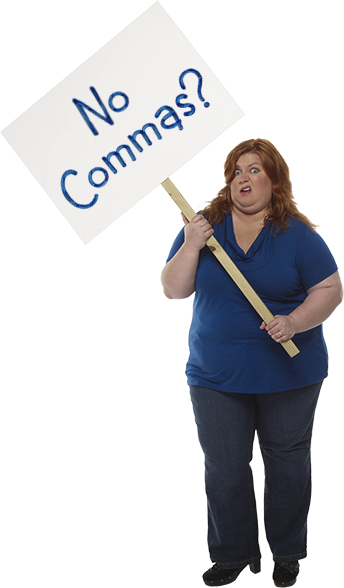
Mine, apparently, is the use of commas.  SEE!  I just did it again!  I naturally place a comma anywhere where I would pause if I were speaking.

Funny, a beta called me on this last year, and I thought he was nuts.  Several other betas have corrected my commas here and there, but didn’t mention my overall addiction.

Recently, a new beta said (paraphrasing) “I’ve read your blog, so I expected you to overuse commas in your novel, but it really slows down the reading.”

I honestly didn’t even realize I was doing this.

Now I am looking for them like a hawk in my novel.

So, what about commas my blog?

I don’t know.  I might let them fly here.  When I type out a post, you should feel like you are talking to me.  If there is a comma there, I am probably taking a cyber-breath.

What do you think?  Do they annoy you?

I find this extremely funny, to be honest. (Tee hee, there is another one… they just fly out of my fingers.)

I’m not editing any of my natural commas out of this post, just for the fun of it.  This is how I speak.

Now, I just need to make sure all my character dialog and narration doesn’t suffer from my comma frenzy as well.

What do you do in your writing that shoots out of your fingers without you even realizing it?  (Gosh, do I want to put a comma in that last sentence, just to break it up a bit!  ARGHHHH!!!)

Confessions of a Suddenly Smiling Stepper:What stupid writing thing did your Beta Reader find this week?

I have to reiterate that Beta Readers are just the greatest thing EVER.  Especially if you can find someone who is almost as anal as you are!

I just had a beta reader finish a 50-page excerpt.  She made some good comments, but the best thing she did was highlight every time I used the words “Step”, “Smile”, and “Suddenly”.

I read over her comments, and initially thought “it’s not that bad”.  Then, like a good little author, I closed it, took a deep breath, and came back to it another day.  What I did the second time, is used my favorite “Search and Replace Tip” to count how many times I used these words.

For those of you who have not read my previous article, here is the trick:

First ***SAVE YOUR DOCUMENT—JUST IN CASE***

Find the word you want to count.  Let’s use “suddenly”.  Open up the “Find/replace” feature in Word.  Search for “suddenly”, and replace with “suddenly”.  JUST MAKE SURE YOU TYPE IT EXACTLY THE SAME WAY so it replaces it with exactly the same word.  When you “Replace All” it will give you a count of how many times it replaced “suddenly”.  BOOM! You now know how many times you used your word.

I found that I used “suddenly” 13 times in 50 pages.  That means one of my characters “suddenly” did something every four pages or so.  I didn’t even realize it.  Absolutely unacceptable!  The funny thing is, I was able to delete almost every one with no other changes, and it was fine.  It was just an unnecessary word.

She is the second person to point out that my characters smile a lot.  So I did my little trick.  YIKES!  Someone smiled 30 times!  That’s once every page and a half!  I sure to have a lot of happy characters, although many were smiling while thinking mean thoughts.  Yes, I went thorough and made some changes.

Next check:  the word “stepped”.  Holy Cow!  In the 50 pages, it counted the word “step” 94 times.  That means someone “stepped” almost twice on every page.  I knew I had characters “stepping” but not quite that much!  Most of the time it is just to get movement into the story, so I need to work that out, and give them different things to do rather than walking around all over the place.

Confessions of a Suddenly Smiling Stepper… even when you know not to do stupid things, you may just read over it when it is your own story.

Beta Readers… they are worth their weight in gold.

If you don’t have a Beta Reader, go get one… but keep away from Ravena.

She’s MINE!  Mine, do you hear me?

***she cackles***

MINE MINE MINE MINE MINE!

I’ll set her free in 300 pages.

Thanks Ravena!

.

.

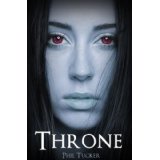
Book Review of THRONE by Philip Tucker

I will never read another book the same as I used to.  Every little thing that’s wrong JUMPS out at you when you become a serious Beta Reader.  Have you ever noticed that?

Anyway, let’s chat about THRONE by Philip Tucker.  I am going to use the general “Oreo Cookie” concept for reviewing this.  Start with the crunchy goodness, dig into the squishy bad, and then end on a crunchy good note.  Not actually hard to do on this one.

THRONE is one of those novels that starts you in the real world in someone’s everyday life, and then catapults you with a slingshot into a new world that you never knew existed.

THRONE takes you on an exciting and action packed journey in a very unique and eventful plotline with a very interesting premise.  Throughout the first half, you know the two main characters are going to meet, but how… and “who is who” is a mystery until it practically happens.

And once they do meet… strap yourself in, because the rollercoaster is heading up the hill, and the ride is about to begin. (I can’t really tell you more without spoiling anything)

The five phases of my monotonous reading mind….  Everything falls into one category:
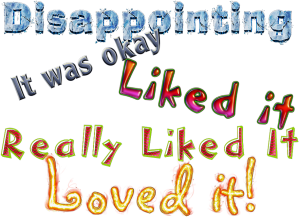
Before I dish out the creamy filling on this novel, let me point out that I really liked it a lot.  Loved it?  No, because of what I’m about to discuss, but I would definitely consider reading another of  Philip Tucker’s novels.  I just need to pay closer attention when I start reading.  Let me explain…

Imagery

Part of the top of the Oreo cookie is the amazing imagery in this novel.  I want to read some of it again because people have said that I use too little imagery  in my writing.  I want to study how the author did it.  The good part was that I knew exactly what the scenes looked like.  The reason why I am mentioning this in the “creamy filling” section is because the imagery went on for TOO LONG in almost every case.

I got a clear view of the scene, started skimming, and clicked my kindle three times to advance, and the character is still looking down the street.  – Again personal preference.  It was EXTREMELY well written, and I can learn a lot from this… it’s just too much for me personally.

Point of View Confusion

If you decide to read this novel (and yes, I would recommend it)  Keep in mind that it is written in two very regimented Points of View.  To be completely honest, I did not realize it was in two points of view until about 16% of the way through it.

The novel is written with one chapter in Maya’s POV, and then the next chapter in Maribel’s POV.  Then it interchanges back and forth.  For some reason, I did not pick up on this until 16% of the way in.  I thought it was the same character.  I thought one chapter was in the current time, and every other chapter was a flashback.  Yes, they have two different names, but for some reason that didn’t click.  Maybe it is because both names started with “MA” and one was older than the other.  I’m not really sure what happened, but for some reason I just didn’t “get it”.

Sooo…. You can imagine my confusion.  I was having trouble keeping track of what events happened to which character.  If you read this, keep in mind that there are two POVs and you will have no problem.

When your dog starts talking to you

My third problem is talking animals.  That is just personal preference.  Watership Down, Charlotte’s Web, Secrets of NIMH, Homeward Bound…No problem… but I just don’t like animals talking to people. (Totally a personal preference—I realize that)

Reactions to suddenly talking animals:  Place yourself in a city.  You are running from something freaky.  You hide in a building, and all of the sudden this fox pops up and starts talking to you…

I’m sorry.  No matter what is going on, if a fox starts talking to me I am going to be FREAKED OUT.  I didn’t buy the character’s reaction to this happening.  She was too quick to be okay with this.

Unanticipated change in Characterization

Another thing that disappointed me was the sudden change in one of the main characters.  Yes, it had to happen for the story to move forward, but after the detailed imagery and wonderful characterization throughout the novel, I felt a little cheated by this sudden change, and it seemed out of character to me.  If someone acts in one way, and then has an extremely DRASTIC turn in characterization, I need to SEE IT COMING to buy it.  Even after finishing the novel, I still don’t buy what happened right after the one character “changed”.  When she did “what she did” only seconds after the “change” I was stunned, and not in a good way.  She did remain in her “changed” state quite well after that, though.  It was just that transition that didn’t seem believable to me. (Gosh, I wish I could explain that better-but I don’t want to drop any spoilers)

After all this happens, jump on to the rollercoaster for a huge, and I hate to use a “trendy word” – EPIC battle scene.  This scene goes on FOREVER… and I mean that in a good way.  I was not bored for a single second.

At one point I thought the battle was going to be over in a very cliché way, but “Oh no!  It didn’t work!”  Run everybody run!  Get out of there!  WHEW!

The pacing was excellent, and I didn’t see the resolution to the conflict before it was in the process of happening.  Nicely done.

The close of the novel

The novel winded down and closed extremely quickly, in a slightly unexpected way, but very satisfying.  (To pop back over to the creamy filling, I would have liked one more chapter in the other Main Character’s POV, because I don’t think her story really closed enough to my satisfaction)

I would have liked a little more of a wind down, but again… I realize that is personal preference.  After being in the middle of that roller-coaster battle scene, I had a bit of that “whiplash” feeling when the high-speed coaster’s breaks hit the tracks.  BOOM!  Last page.  It’s over.  Get out.  You’re done.  A little too abrupt for me.  Again—not going to subtract a cookie for this, since that’s just my preference.

I will give this novel four out of five Oreos.  It loses one-half an Oreo each on two points… because I was confused to start… and it had too much imagery for my tastes.  From me that is a glowing recommendation.  I really liked it despite what bothered me about it.

This author is extremely talented and has a great writing style.  Great story, great premise, very nice execution.

I would recommend this to any writer looking for an example of well-written imagery (I’d just suggest cutting your imagery a little slimmer if you want people like me to read it.)

I’d also recommend it for anyone that would like to experience a GREAT battle scene… and I mean that.  You won’t just read it.  You will experience it.

Good stuff.

.

.

.
.

Sorting Out Your Feedback Comments: Dealing with Conflicting Criticism

If you have had several people reading your work, conflicting opinions are common.  But what do you do with them?  Your mother says you are brilliant, but then you find this person you’ve never met who thinks your novel needs all these changes!  Huh?

***Smile*** I wish my Mom was still around to tell me how brilliant I am.

First of all, ditch your mother’s opinion.  Her job in life is to support you no matter what.  She thought your mud pies were works of art, remember?  Mommy, Daddy, Sister, Brother… all those great people.  Let them read, but be careful of their praise, no matter how critical you think they normally are.

Anyway… This is where I am going with this post…

I had one beta left from my previous beta run that recently finished a second read of HIDDEN IN PLAIN SIGHT.  He told me that the words I chose were too childlike, and even if I was writing for a teen audience, I should not insult their intelligence, so I should insert some more adult words in the narrative.

In this new and final round of beta readers– reading pretty much the same manuscript– another beta (I don’t know either of them personally, by the way) told me that some of my words are too mature in my narrative for a YA audience.

Talk about contradictions!  One says too mature, one says too childlike.  Exactly the same manuscript.

Mulling it over, I am sticking to my guns and not “smartening it up”.  I appreciate an easy read.  I am sure I’m not the only one.  Even with the Kindle (easier to look words up in the dictionary)  unknown words are annoying, and I either totally ignore them, or if I do look them up, I have spoiled the pacing.  That is not what I want to do to my reader.  I did replace one word he complained about, but I replaced it with a “common speech” word.

Now… dumb it down further?  Hmmmm.

Reader #2’s comments are valid.  The older-sounding words are in the narration, but in a ten-year-old’s POV.  Would he really have the word “furrowed” in his narrative self-conscious?  (It is not inner thought by the way.  That would be a no-brainer.)

In this case, he “furrowed his brow.”  I changed this to “Twisted his brow” and I have to admit she was right.  It flows much better and sounds natural.  She also suggested that no ten-year old even knows they have hair follicles.  (He is getting his hair pulled, and the follicles spring back to his scalp when they let go.)

The follicles I am leaving.  I didn’t find that one as obtrusive.

There is another point when someone furrows their brow, but it is in an adult POV.  That one I will probably leave as well, since the perspective is more “mature”.

So— Sorting out contradicting feedback…

One person says apples, the other person says bananas.  I reviewed their suggestions and gave them strawberries.   Everything I’ve read said don’t try to make one person happy, write to the masses.  I don’t think I’ve ever met anyone who didn’t like strawberries.

Have you ever had such completely contradictory assessments?  What did you do?

Row80 — I Finished My Novel!!!!!!

Well, the Header post says it all.

I am all grins and giggles galore.

Can you guys see me smiling all the way in Argentina?  Canada?  UK?  Well, if you were wondering what that bright light was here in the USA its ME!

Here are the final stats for all you who’ve been traveling this journey with me.

109,812 words, 411 pages

I was trying to edit down to 100,000, but that was just so I could submit to a single publisher who maxes out at 100,000.  I started this mad edit at about 120,000 words, and when I got it to where it is now, I decided to heck with it.  This is my novel, and it is perfect.  Taking anything else out at this point would make the story suffer.  I will always take creative critisizm, and am ready for it, but this is where I am staying for now.

Edit stats:

65,724 words cut from the first draft.  That’s 233 pages.  Funny, I think the first draft was only a little over 350 pages.  It shows you what kind of roller coaster ride you can take on the way to perfection.

My Row 80 goal for the end of the year was to finish HIDDEN IN PLAIN SIGHT, and here I am.  Wow.  What an amazing feeling.

I’m going to submit my one and only recent Short Story to a magazine shortly.  I have a few comments from Betas to look over, and am waiting for my “subject matter expert” to get back to me to make sure I didn’t make any mistakes.

I need to pick some new beta readers and “just plain readers” to do one last read of HIDDEN IN PLAIN SIGHT now that it is complete.  Some of it has been changed so drastically that no one but me has read many of the chapters, and I need to take my own advice and NEVER query anything that hasn’t been fully and completely Beta-Read.

Anyone interested?

If you are, send me an email.  (there’s a “contact” button in my header bar.)  I better note that I can’t do a mutual beta exchange with EVERYONE who follows this blog.  I’m not Wonder Woman (although my kids think I am) but I can take on 5 Beta partners if you think your manuscrupt is ready.

Thanks everyone for your support.  I hope your week has been as exciting!

Editing, Editing, and then, well, MORE EDITING-Advice from Publisher Authors

At a recent NJ Author’s talk on “Getting Published” (Click here to read my post from that night), many authors on the panel spoke about the importance of editing.  No brainer, right?  Well, you might be surprised.

There are a lot of people out there who have written a “great story” and sent it right out to agents, burned their bridges, and never had a beta read.  I know you are nodding your head.  Hopefully it’s because you KNOW someone, and you are not the culprit.

I ALMOST did this around a year and a half ago (Wow, has it been that long already?)  I finished HIDDEN IN PLAIN SIGHT.  I edited the heck out of it with only my own input, and I was about to send it out.  I had trouble finding someone to read it for me, and I was confident, so I was going to skip this step…. but something told me to go out and find a beta reader.  I found a guy I didn’t know, and we exchanged manuscripts.  That’s when I found out that I had a great story **Yay**, HOWEVER, my presentation stank.

Author Jon Gibbs said “People send their work off too soon” He noted that when we read someone else’s work, we read what they wrote.  (Duh, right?)  Well think this over — When we read our OWN work, we read what we THINK WE WROTE.

How true is this?  I never noticed my lack of setting or character description, because I KNEW what everything looked like.  (Among many other problems my beta reader pointed out)  You really need to get a few people to look at your novel while you are editing to make sure you are writing what you THINK you are writing.  It actually took me about four beta readers to whack me upside the head and set me straight on this.

Jennifer R. Hubbard admitted that she didn’t edit enough when she started out, and that she was getting rejections.  The book she revised 12 times and had others read was the one that got published.  (I guess she is talking about “The Secret Year”)

Danielle Ackley McPhail suggested having different kinds of readers in the editing phase… Beta readers will help make your writing better, and “just plain readers” will tell you if the story flows and is enjoyable.  She also suggested making sure one of your “just readers” is someone who does not normally read your genre to get a different perspective.

So, if you are like me, and have people in your life pushing you to get your stuff out there… stick to your guns.  Do your beta-read drills.  Edit after their comments, and then DO MORE BETA READ DRILLS.

I am excited to say that I am sending out HIDDEN IN PLAIN SIGHT for the third round of beta-reads (and three “just plain readers”) shortly.  After six beta readers, and editing and revising it with reckless abandon for well over a year, I think I’ve finally really written what I think I’ve written.  If not, I have full confidence that my readers will “Let me have it”.

I am going to look for new readers too, so I can get some fresh perspectives.  I am really looking forward to seeing if all this hard work has paid off!

Jennifer Eaton

Lesson Four from the Gold Mine Manuscript Red Line: And Then there was a Conjunction, or Was There?

For an intro into where these tips are coming from, please see my post: A Full Manuscript Rejection, or a Gold Mine?

Originally, I was going to skip over this, because I thought it seemed a little obvious.  But then I thought, maybe not.

This publisher simply hated the idea of “and then”.  They said: “And then is not a proper conjunction.  And is a proper conjunction… use for, and, nor, but, or, yet, so which are considered “proper” conjunctions.”

I did a search in my own manuscript, and found 73 instances of “and then”.  Honestly, I was a little surprised to find so many in my story.  The more I thought about it, every instance is like a laundry list “tell sequence”.

Matt did this, and then he did that, and then he did that. (It was not quite so blatant, but you get the idea) If you think about it, it’s kind of funny.  I know when I was beta reading the manuscript for my BP, the “and then’s” did pop out here and there, but I just figured it was writing style.  I didn’t particularly like it, but I let it go.  I didn’t even realize I was doing it myself.  Now that I’m re-reading with these comments in mind, they are popping out and blaring:  No No No!

So, my advice is, do what I did:  Do a search/replace on your manuscript just for starters.  Search for “and then” and replace with “and then” (just make sure you spell it correctly)  It won’t change anything, it will just give you a count of how many times you did it.  If it’s a lot, search again and start editing!

This is an easy fix.   I’m not saying this will bother every publisher, but if it’s a pet peeve of one publisher, it will probably bother another one, or two, or three.  Personally, I’m not willing to take a chance and let them go now that I realize what I’ve done.

Happy editing!