Tag Archives: Fiction

Lesson Thirty from a Manuscript Red Line: Finale! Summing it all up

Wow.  It has been about 7 months since my beta partner and I sat on the phone pulling our hair out over the comments the publisher made on her manuscript.  I think at this point I have hacked up and drilled everything they had to say as much as possible.  The rest of their comments are just repeats of the same mistakes throughout the work.

Sooooo….. This is the last one.  Thirty posts in all.

So, did this help you?  Did you learn from this?  I totally did.  My novel is much more crisp, clean, and fluid as a result of all this information.  I hope you have benefitted as well.

Now the only problem is…. What do I post about on Monday nights from now on?

**GACK**  I have no idea!

Here are all the lessons in a sparkly package for you.  If you missed one, I’d suggest going back and taking a look.  Heck, maybe read them over again to get a fresh perspective.

I hope that you have all benefitted from these lessons as much as I have.  I’d also like to send out a special “thanks” to the brave author who was nice enough to allow me to slice and dice her red-lined manuscript for all the world to learn from.

Just out of curiosity, which lessons helped you the most?

I truly hope all of you will have the opportunity one day to add the revised version of the Gold Mine Manuscript into your own libraries.  Once it is published, (with the author’s permission) I will let you know so you can all see the value of good clear suggestions, and the results of hard work and editing.

Introduction

Lesson One:  Write without Looking

Lesson Two:  Do we like your main character yet?

Lesson Three:  Action Action, where is the Action?

Lesson Four:  And Then there was a Conjunction, or Was There?

Lesson Five:  Let’s keep it in the past

Lesson Six:  Watch that Voice!

Lesson Seven:  Where did that character come from?

Lesson Eight:  Magically Appearing Items in the Setting

Lesson Nine:  Written Any Good (Bad) Cliché’s lately?

Lesson Ten:  Girls Rule and Boys Drool

Lesson Eleven: Pre-Telling

Lesson Twelve:  How Are Your Characters Feeling Today?

Lesson Thirteen:  Keeping inside the Point Of View, Part 1

Lesson Fourteen:  Keeping inside the Point Of View, Part 2

Lesson Fifteen:  How Many POV’s Can You Have?

Lesson Sixteen:  Cutting down your Point of View Characters

Lesson Seventeen:  Who are we talking to?

Lesson Eighteen: What makes your story Unique?

Lesson Nineteen: Don’t annoy the reader

Lesson Twenty: Don’t make things so easy

Lesson Twenty-One: Common, and Cliché Themes

Lesson Twenty-Two: Does your Protagonist “Grow Enough?”

Lesson Twenty-Three from a Manuscript Red Line:  Kindle Syndrome

Lesson Twenty-Four: Remembering where your characters are

Lesson Twenty-Five: Bullying for Bully’s sake

Lesson Twenty-Six:  Capital Letters

Lesson Twenty Seven: Fluidity in Action-The Art of a Good Fight Scene

Lesson Twenty-Eight: Very Discreet Point of View Switches

Lesson Twenty-Nine:  Watch your Synopsis

Don’t forget to let me know which one you enjoyed the most!

Confusing Me and I… Ahhh the never ending quandary of a writer

There was a great article on Dictionary.com this week about confusing “I” and “me”

Click over here if you’d like to take a look.   http://hotword.dictionary.com/youandme/

Misuse of these two words is really common.  I hear people do it all the time.  Even in my own house, which I try to keep as grammatically correct as possible.

The words “I” and “me” get my husband and me into a rumble once in a while.  He will correct one of my sons, and then I will correct him, because my son was right.  In our culture in the USA, there is so much “overcorrection” of the word “I” that it is starting to sound right when people use it incorrectly.

Let’s take the first sentence in the previous paragraph.  “The words get my husband and me into a rumble.”  It sounds wrong, doesn’t it?  I actually typed it incorrectly the first time (yeah, I am admitting it) because “I” just sounded right.  I then went back and corrected it.

How can you tell if you are wrong?  Take out the other person, and leave the sentence the same.  Let’s try it.

The words get my husband and me into a rumble

The words get me into a rumble.

The second sounds correct, so we did it right.  In this example, “My husband and me” is correct.  Now, let’s do it incorrectly

The words get my husband and I into a rumble.

The words get I into a rumble.

Oh!  That didn’t work too well, did it?  In this case “My Husband and I” is incorrect.  If you are ever unsure, just take out the second subject and see how it works out.

Need an example when “I” would be correct?  Well, ask and ye shall receive!

George and I should have dinner sometime

I should have dinner sometime

That sounds good.  Okay, how about “Me?”

George and me should have dinner sometime

Me should have dinner sometime.

Oh, Yuck!  That didn’t work at all.  So, in this example, “I” is correct.

The problem is, that “You and I” has been so OVER-CORRECTED, that the word “I” almost always sounds correct.  Even to me.  In the first example, I really wanted to write “My husband and I.”

This is a case of English being an evolving language.  As a writer, you need to make a choice to follow the natural progression of language, or to adhere to “correctness”.

Honestly, between us… your reader probably won’t even notice.

The questions is— which camp your editor/publisher is in?

Ahhh… the quandaries of a writer.

.

.

.

.

.


Lesson Twenty-Nine from a Manuscript Red Line: How’s your synopsis?

The publisher talked a lot about the synopsis in the closing comments of the Red-line.  I found this really strange, but I thought it had merit to mention it.

For an intro into where these tips are coming from, please see my post: A Full Manuscript Rejection, or a Gold Mine?  You can also click “Rant Worthy Topics” in my right navigation bar.  Choose “Gold Mine Manuscript” to see all the lessons to date.

The reason I found this strange, was because they’ve already read the manuscript.  They’ve already made comments, and asked for it to be re-submitted.  Why are they even talking about the synopsis?

What it seemed like to me (being an optimist) is that they were actually being helpful.  They probably knew that there was a chance that the author may not make all the changes to their satisfaction, and that she might submit to other avenues.  They were nice enough to point out problems with the synopsis that might help her if she sent it somewhere else.

(Honestly, after reading all their synopsis critiques, I was wondering why they even asked for a “full” in the first place.  I guess you never know.)

So, this is what they said…

They went through a laundry list of what the story “is not”.

It is not about this, it is not about that either.  (Quoting what was mentioned in the synopsis)

It is not a character study on the main character.

The quest is not fleshed out…

These are some of the comments.  I am guessing they are saying that the synopsis was too in-depth and talked about the side plots in the story.

I can totally understand this.  It took me months of writing and digging and cutting and beta-bashing until I finally realized what my story is about…

Magellan Talbot has to save the world.  Too bad he doesn’t know it.

Boom.  Done.  Now, there is a lot of other stuff going on that is SUPER important and makes the story unique, but you wouldn’t believe how hard it was for me to boil it down to the above.  I kept getting bogged down by the details.  The crux of the story is simple.

To save the world he has to save the Goddess.
To save the goddess he needs to fight for her.
To fight for her, he needs to find the Rapier.
To find the Rapier, he needs to remember his dreams…
The catch?  He can never remember his dreams.
Or anything else about who he really is.

There is also a lot of other stuff going on.  There is a love story, and a jealous brother trying to kill  Magellan… but simplicity is the key for the synopsis… I need to use only the elements that draw the story forward that are closely attached to Magellan saving the Goddess.

The publisher’s next comment in the Gold Mine Manuscript was “If the story is about saving (the alternate world) then that’s your focus and everything that happens in the story needs to lead to that point.  And the synopsis needs to be focused on all the activities that happen to get to that point.  Tie in every character that is introduced to get there as well as why and how (the MC) is the true key… build that up and show how that’s important.  Show us through actions and scenes that push the story forward.”

After reading this, I think I may have edited my own summary down too far.  I bought it down to the bare bones of the fewest characters involved that draw the main plot line forward.  And I also think I centered on the WRONG plotline.  My current synopsis is straight and to the point, but it is more centered on the jealous brother… which is important, but not the center.  I also took out Harris, who is probably equally as important in the novel as Magellan is.

Honestly, I am just not qualified to give anyone advice on a Summary.  I am just as lost as the rest of you.  I have helped out others with suggestions, because sometimes it is easier to have someone else boil down your story for you.  The best I can do is give you the exact quote that the publisher wrote for the Gold Mine Manuscript. (above)

Read their comment over carefully, and do your best with it.  And… when you get lost… remember that you have friends in the blogosphere who are always willing to help.

Lesson Twenty-Eight from a Manuscript Red Line: Very Discreet Point of View Switches

I’ve talked about this before, but the second time might be a charm.  I think a lot of people are having trouble with discreet POV switches.  The big ones… where we pop heads for half a chapter are easy to find.  The one-liners may be harder to spot.

For an intro into where these tips are coming from, please see my post: A Full Manuscript Rejection, or a Gold Mine?  You can also click “Rant Worthy Topics” in my right navigation bar.  Choose “Gold Mine Manuscript” to see all the lessons to date.

Let’s go back to my little flash fiction scene.  Remember Jason and Eric fighting?  Let’s add a line to that.  (In bold)

Jason grunted as his fist swung toward Eric’s face.  Eric tried to dodge, but instead felt the sting of the older boy’s ring cutting into his jaw.  He fell to the floor with a muffled thump, and groaned as he rolled over. 

Jason wiped his chin and laughed.  “I told you to stay down.”

Eric pushed up onto his knees.  “Why, so you can just pummel me?”  He popped up and swung at Jason, but missed.

Jason ducked and swung at the same time.  There was no time for Eric to react.  His head creaked back, and his jaw rattled as he crumpled to the floor.

Jason breathed heavily, mopping the sweat from his brow.  He grunted and chose his words carefully.  “I told you to stay down, idiot.”  He snickered at the pitiful scene before him, and walked away.

There you have a short-one paragraph POV switch.  The scene is in Eric’s POV.  How would Eric know Jason was choosing his words carefully?  How would Eric know he was snickering at how pitiful he looked?  (Remember Peanut butter and Jelly Syndrome?)  Jason could have just remembered a funny joke.  Eric has no idea what he is really thinking.

The reason I used “Chose his words carefully” which might be a little odd in the example above, was because those were the words used in the POV switch in the Gold Mine Manuscript.  We were in character #1’s POV, and then another character “chose his words carefully”.  They flagged it as a POV switch.

Honestly, before reading their comments, I would have read right over this… I have also seen it in published works, but it is a switch in POV.  Do your best to keep an eye out for little things like this.  It will set your novel apart.

Hope this helps!

Lesson Twenty-Six from a Manuscript Red Line: CAPITAL LETTERS

Do you use Capital letters when your character yells?  Do you use them for casting spells?  Do you use them for inner thoughts?


Me?   No, Jennifer. 

I would never do such a thing! 

Well, I might… and I have.

For an intro into where these tips are coming from, please see my post: A Full Manuscript Rejection, or a Gold Mine?  You can also click “Rant Worthy Topics” in my right navigation bar.  Choose “Gold Mine Manuscript” to see all the lessons to date.

Amendment:  Hey!  This is my 100th post!  COOL!

I briefly mentioned CAPS in my first post on the Manuscript Red Line. (That was over Five months ago… Wow)  Anyway… here is the explanation.  The publisher said:

“The use of capital letters to show emphasis in a scene is not acceptable.  Especially don’t use it with magic, since JK Rowling did it that way.” (The Gold Mine author used caps as the character cast his spells)  “Come up with something new.  This is the key to fantasy – be unique – try not to do what was already done.”

Don’t shoot the messenger… this is their red-line, not mine.

In my novel, the characters don’t cast spells, but I did catch a few YELLING once in a while in CAPITAL LETTERS.  I got so used to looking at it that I liked it, but I have to admit, it works much better as “Get out!” rather than “GET OUT!”.  I use caps a lot for emphasis in my blog, so they may have wiggled their way into my novel.

For all you spell casters out there:  You can do better than JK Rowling.  She had her idea.  Now you need to come up with yours.  What are you going to come up with that everyone else wants to copy?

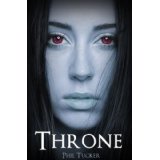
Book Review of THRONE by Philip Tucker

I will never read another book the same as I used to.  Every little thing that’s wrong JUMPS out at you when you become a serious Beta Reader.  Have you ever noticed that?

Anyway, let’s chat about THRONE by Philip Tucker.  I am going to use the general “Oreo Cookie” concept for reviewing this.  Start with the crunchy goodness, dig into the squishy bad, and then end on a crunchy good note.  Not actually hard to do on this one.

THRONE is one of those novels that starts you in the real world in someone’s everyday life, and then catapults you with a slingshot into a new world that you never knew existed.

THRONE takes you on an exciting and action packed journey in a very unique and eventful plotline with a very interesting premise.  Throughout the first half, you know the two main characters are going to meet, but how… and “who is who” is a mystery until it practically happens.

And once they do meet… strap yourself in, because the rollercoaster is heading up the hill, and the ride is about to begin. (I can’t really tell you more without spoiling anything)

The five phases of my monotonous reading mind….  Everything falls into one category:
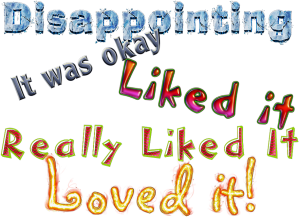
Before I dish out the creamy filling on this novel, let me point out that I really liked it a lot.  Loved it?  No, because of what I’m about to discuss, but I would definitely consider reading another of  Philip Tucker’s novels.  I just need to pay closer attention when I start reading.  Let me explain…

Imagery

Part of the top of the Oreo cookie is the amazing imagery in this novel.  I want to read some of it again because people have said that I use too little imagery  in my writing.  I want to study how the author did it.  The good part was that I knew exactly what the scenes looked like.  The reason why I am mentioning this in the “creamy filling” section is because the imagery went on for TOO LONG in almost every case.

I got a clear view of the scene, started skimming, and clicked my kindle three times to advance, and the character is still looking down the street.  – Again personal preference.  It was EXTREMELY well written, and I can learn a lot from this… it’s just too much for me personally.

Point of View Confusion

If you decide to read this novel (and yes, I would recommend it)  Keep in mind that it is written in two very regimented Points of View.  To be completely honest, I did not realize it was in two points of view until about 16% of the way through it.

The novel is written with one chapter in Maya’s POV, and then the next chapter in Maribel’s POV.  Then it interchanges back and forth.  For some reason, I did not pick up on this until 16% of the way in.  I thought it was the same character.  I thought one chapter was in the current time, and every other chapter was a flashback.  Yes, they have two different names, but for some reason that didn’t click.  Maybe it is because both names started with “MA” and one was older than the other.  I’m not really sure what happened, but for some reason I just didn’t “get it”.

Sooo…. You can imagine my confusion.  I was having trouble keeping track of what events happened to which character.  If you read this, keep in mind that there are two POVs and you will have no problem.

When your dog starts talking to you

My third problem is talking animals.  That is just personal preference.  Watership Down, Charlotte’s Web, Secrets of NIMH, Homeward Bound…No problem… but I just don’t like animals talking to people. (Totally a personal preference—I realize that)

Reactions to suddenly talking animals:  Place yourself in a city.  You are running from something freaky.  You hide in a building, and all of the sudden this fox pops up and starts talking to you…

I’m sorry.  No matter what is going on, if a fox starts talking to me I am going to be FREAKED OUT.  I didn’t buy the character’s reaction to this happening.  She was too quick to be okay with this.

Unanticipated change in Characterization

Another thing that disappointed me was the sudden change in one of the main characters.  Yes, it had to happen for the story to move forward, but after the detailed imagery and wonderful characterization throughout the novel, I felt a little cheated by this sudden change, and it seemed out of character to me.  If someone acts in one way, and then has an extremely DRASTIC turn in characterization, I need to SEE IT COMING to buy it.  Even after finishing the novel, I still don’t buy what happened right after the one character “changed”.  When she did “what she did” only seconds after the “change” I was stunned, and not in a good way.  She did remain in her “changed” state quite well after that, though.  It was just that transition that didn’t seem believable to me. (Gosh, I wish I could explain that better-but I don’t want to drop any spoilers)

After all this happens, jump on to the rollercoaster for a huge, and I hate to use a “trendy word” – EPIC battle scene.  This scene goes on FOREVER… and I mean that in a good way.  I was not bored for a single second.

At one point I thought the battle was going to be over in a very cliché way, but “Oh no!  It didn’t work!”  Run everybody run!  Get out of there!  WHEW!

The pacing was excellent, and I didn’t see the resolution to the conflict before it was in the process of happening.  Nicely done.

The close of the novel

The novel winded down and closed extremely quickly, in a slightly unexpected way, but very satisfying.  (To pop back over to the creamy filling, I would have liked one more chapter in the other Main Character’s POV, because I don’t think her story really closed enough to my satisfaction)

I would have liked a little more of a wind down, but again… I realize that is personal preference.  After being in the middle of that roller-coaster battle scene, I had a bit of that “whiplash” feeling when the high-speed coaster’s breaks hit the tracks.  BOOM!  Last page.  It’s over.  Get out.  You’re done.  A little too abrupt for me.  Again—not going to subtract a cookie for this, since that’s just my preference.

I will give this novel four out of five Oreos.  It loses one-half an Oreo each on two points… because I was confused to start… and it had too much imagery for my tastes.  From me that is a glowing recommendation.  I really liked it despite what bothered me about it.

This author is extremely talented and has a great writing style.  Great story, great premise, very nice execution.

I would recommend this to any writer looking for an example of well-written imagery (I’d just suggest cutting your imagery a little slimmer if you want people like me to read it.)

I’d also recommend it for anyone that would like to experience a GREAT battle scene… and I mean that.  You won’t just read it.  You will experience it.

Good stuff.

.

.

.
.

Lesson Twenty-Seven from a Manuscript Red Line: Fluidity in Action – How to write a good action scene

An example of a poorly written action scene:

Jason punched Eric in the face.  Eric fell to the floor.  Eric groaned and rolled over.   Jason wiped his chin and laughed.  Eric popped up, and Eric swung at Jason, but missed.  Jason ducked and swung at the same time.  Eric crumpled to the floor.

(Yes, I totally made this paragraph up.)

The publisher’s comment on a similar (but not as poorly written) sceneThis is a very stilted fight scene. It reads action, next action, next action, next action without the fluidity that’s needed for a fight scene.

For an intro into where these tips are coming from, please see my post: A Full Manuscript Rejection, or a Gold Mine?

You can also click “Rant Worthy Topics” in my right navigation bar.  Choose “Gold Mine Manuscript” to see all the lessons to date.

I have to admit, when I read the action passages in the Gold Mine Manuscript, I had the same comment.  The author was satisfied with the speed of the scenes though, and only made moderate changes.  Not being an expert, I backed off and figured it was just a “style choice”.  Guess not.

This fits in very well with my recent post on “Art of the Conflict”.  This scene is not about dialog, but this is definitely a conflict.  This one needs something inserted to break up the action, rather than action inserted to break up the dialog.

Now, I am not going to put a lot of time into this, since the scene is totally fake.  But let me add a little “art” to make it “flow”.  Fluidity is what they asked for.  Okay, here it goes…

Jason grunted as his fist swung toward Eric’s face.  Eric tried to dodge, but instead felt the sting of the older boy’s ring cutting into his jaw.  He fell to the floor with a muffled thump, and groaned as he rolled over.

Jason wiped his chin and laughed.  “I told you to stay down.”

Eric pushed up onto his knees.  “Why, so you can just pummel me?”  He popped up and swung at Jason, but missed.

Jason ducked and swung at the same time.  There was no time for Eric to react.  His head creaked back, and his jaw rattled as he crumpled to the floor.

Better, huh?  Not perfect by a long shot, but not bad for three minute flash fiction.  Can you feel the difference?  The staccato choppy “This happened-That happened” feel is gone, and the scene “flows”.

Of course, this is a first draft.  In editing, I would have to remove the “ing” word and the telly “felt”.  I would also insert a little emotion when Eric realized he missed, but this is definitely better by far than the first.  The art draws you into the scene.  You experience it, rather than just watching it.

The art of the conflict… If you don’t have it, go get it.

If you want to see a great published example, pick up a copy of  THRONE by Phillip Tucker and open up anywhere in the last hundred pages or so.

I hope this helps to make it more clear!

The Art of the Conflict – Keeping your Pacing while keeping your reader engaged.

Recently I was speaking to some writers, and the topic of “art in writing” came up.  We were talking about art in conflict, and I think some people didn’t quite “get it”.

Writing sometimes can get “stale”.  I know, I’ve caught myself doing it.  It’s really easy to get caught up in your dialog, especially during a conflict.  The dialog will start shooting out of your fingers.  This character says this, that character yells that.  You have a clear vision of the scene, but you just type out the dialog part.  Problem is, since you have the “clear vision” you “see” what is happening when you read it back to yourself, and you might not realize that the “art” is missing.

One of my beta partners called me on this about 8 months ago.  He told me that it sounded like my characters were sitting there on each side of a table reading lines of a script to each other.  There was nothing else happening but dialog.

I was a little surprised by the comment.  After all, they were raising their hands, slamming their fists, throwing things… weren’t they?  Well, honestly… only in my head.  That’s the way I envisioned it, but I forgot to add that to the “art” of the conflict.  When I read it back… he was right.

My challenge was then, to go back and CREATE the art.  In doing so however, I needed to make sure I didn’t SLOW DOWN the conflict.  I needed to keep it flowing.  I needed to keep the pacing.  I needed to keep the intensity of the scene.

Much easier said than done.

That is why it is an “art”.  It takes trial and error, and practice.  If your “art” pulls your reader out of the story, and reminds them that they are reading, or even worse… makes them start skimming to get to the good stuff… you have spoiled your story for the sake of art.

The author who can create art, and keep the reader engaged, is a true storyteller.

.

Lesson Twenty-Five from a Manuscript Red Line: Bullying for Bully’s sake

“Having a bully for the sake of having a bully is a contrived way of injecting conflict.”

Well, I don’t think I can say it any better than the publisher’s quote above.

There was a bully in the Gold Mine Manuscript that really had no concrete tie to the main plotline.  His only reason for being in the story was to have a bully in the Main Character’s “normal” life.

For an intro into where these tips are coming from, please see my post: A Full Manuscript Rejection, or a Gold Mine?  You can also click “Rant Worthy Topics” in my right navigation bar.  Choose “Gold Mine Manuscript” to see all the lessons to date.

Knowing a little about the plotline after “book one” I do know that the “bully” would have a little more of a role, but overall, he was never really integral to the plot.  The author has even mentioned that although she was sad about it, the removal of this character was actually fairly easy.

Why?  Because nothing he did was deeply tied into the main plot.  When he was gone, the main plot was still solid, and he wasn’t even missed.  In fact, after reading a partial re-write a month or so ago… I have to admit that the story is even tighter without him.

Take a look at each character in your novel and ask yourself.  “How does this character drive the plot forward?”

If you have to make excuses for why the character is there, it is time to re-think them.

Yes, I know this is hard.  I have three in my own story, but I need them for later novels, and I don’t want them to just magically appear.

1. Tome, is the main character’s roommate, but a stand-by and watch character.

2. Kilet is integral to a few scenes but is replaceable.

3. Brandon  is only in one scene that does nothing to draw the main story forward (although it does draw a side-plot forward.  He will make another one-scene appearance in book two, and then he is a very important character in books three and four.)

I did cut down Kilet to a very brief background role by replacing his “lines” with a more major character, but the other two characters are still there.

I know, I know.  Yes, I know what you are thinking…  I am just admitting the mistakes that I KNOW I am making.  The Brandon scene is tied into Matt cutting his hair, and if you’ve been reading for a while, you know how I feel about that scene.  That is why Brandon is still there.

Yeah, I struggle with this stuff, too.

Lesson Twenty-Three from a Manuscript Red Line: Kindle Syndrome

Does your novel have Kindle Syndrome?

Would you be able to recognize it if it did?

For an intro into where these tips are coming from, please see my post: A Full Manuscript Rejection, or a Gold Mine?  You can also click “Rant Worthy Topics” in my right navigation bar.  Choose “Gold Mine Manuscript” to see all the lessons to date.

I read right over this comment at least five times.  I do not own a kindle, so I didn’t understand what the publisher was saying.  This past weekend, I messed around with my sister’s Kindle.  Now this makes sense.  Let me explain…

The publisher said:  “This is a very long section that takes up two kindle pages of material.  Break it up with action and reaction.”

I believe I’ve already blogged about the overall problem of info dumps that go on too long, but this time when I read this comment, the “Kindle” word jumped out at me.

It would be foolhardy for anyone to think that their novels are going to be read 100 % in printed form.  In this new era, it’s just not feasible.  As we all know, technology has finally taken over the publishing world.

When I beta-read novels, I sometimes blow up the pages and just look at them.  If it looks like a text-book, I know there is a problem.  People want white-space when they read recreationally.  A dense page seems like too much work, right?

Now think about the Kindle (or choose your e-reader)…  What does it look like?  Do you see a full page like in a book?  Unless you are reading on something large, the screen is much smaller than an actual page.  A Kindle reader may press the forward button 2-3 times to get through a printed page of material.  I checked the word count on the section that they were talking about, and it was 230 words.  That’s about one page in a standard book.  If you change the type font and make it larger, there would be even more clicks to your page.

Do you really want your reader to click forward 3-4 times and have them still skimming reading the same description?

This is what I am getting at… The importance of White Space

White space is when you can “see the paper” behind your words.  White space can be achieved by new paragraphs, but it is done most effectively with dialog sequences.  Open up a few novels.  You should be able to see what I mean.  Your novel should not look like a text-book.  If there is dialog, it will look more “interactive”

I know as a reader I like white space.  It makes me feel accomplished.  True, on a kindle you cannot feel yourself getting to the end of a novel.  You might not even know you are at the end until you are there, since there are no page numbers (at least on the one my sister showed me)—so feeling accomplished while reading one must be hard…  But because of this, your reader will be effected EVEN MORE by lack of white space, because it will be so much more dramatic on a kindle screen rather than on paper.

I know a lot of you might not care… but I thought this would be worth mentioning.  We are living in a new world.  We have to consider what your novel will look like on the new media.   One or two long dense paragraphs might be fine once in a while, but make sure your scenes are broken up not only for pacing, but to get some of that “all so important” white space.

Amendment:  Since writing this post, I was given a Kindle Fire by my wonderful husband, and I am now 75% through my first novel.  Now that I am in this “electronic world,” I have to admit that everything I said up above really does apply.  Some of the description in the novel I am reading go on for 5 or more kindle pages of dense text.  The prose is beautiful, and well written, but to be honest I always start skimming somewhere in the middle of the second kindle page, which is far sooner than I would have on paper.

Also, on the Kindle Fire there are no page numbers, but it does tell you “percentage read” so you do see yourself getting to the end.

For me though, it makes the long descriptions even more monotonous because I like to feel accomplished.  I try to read a certain percentage each night, and I don’t know how many pages I have to read to achieve another “percent” read.

Yeah, I’m a nut.  But I am sure I am not alone!  Have mercy on a nutty reader.  Avoid Kindle Syndrome.

Jennifer Eaton